Proportions of a Human Body (Rina_smo)
Preview:
Learnt how to draw different body types with the right proportions.
Synonyms: adults; children; male body; female body; body proportions
Summary
Proportions are a very important stage in drawing the human body. Beginners often skip this stage and move straight on to drawing muscles, small details, and so on. In this guide, I want to talk about why you should never skip this initial preparation for drawing!
Measuring system, landmarks
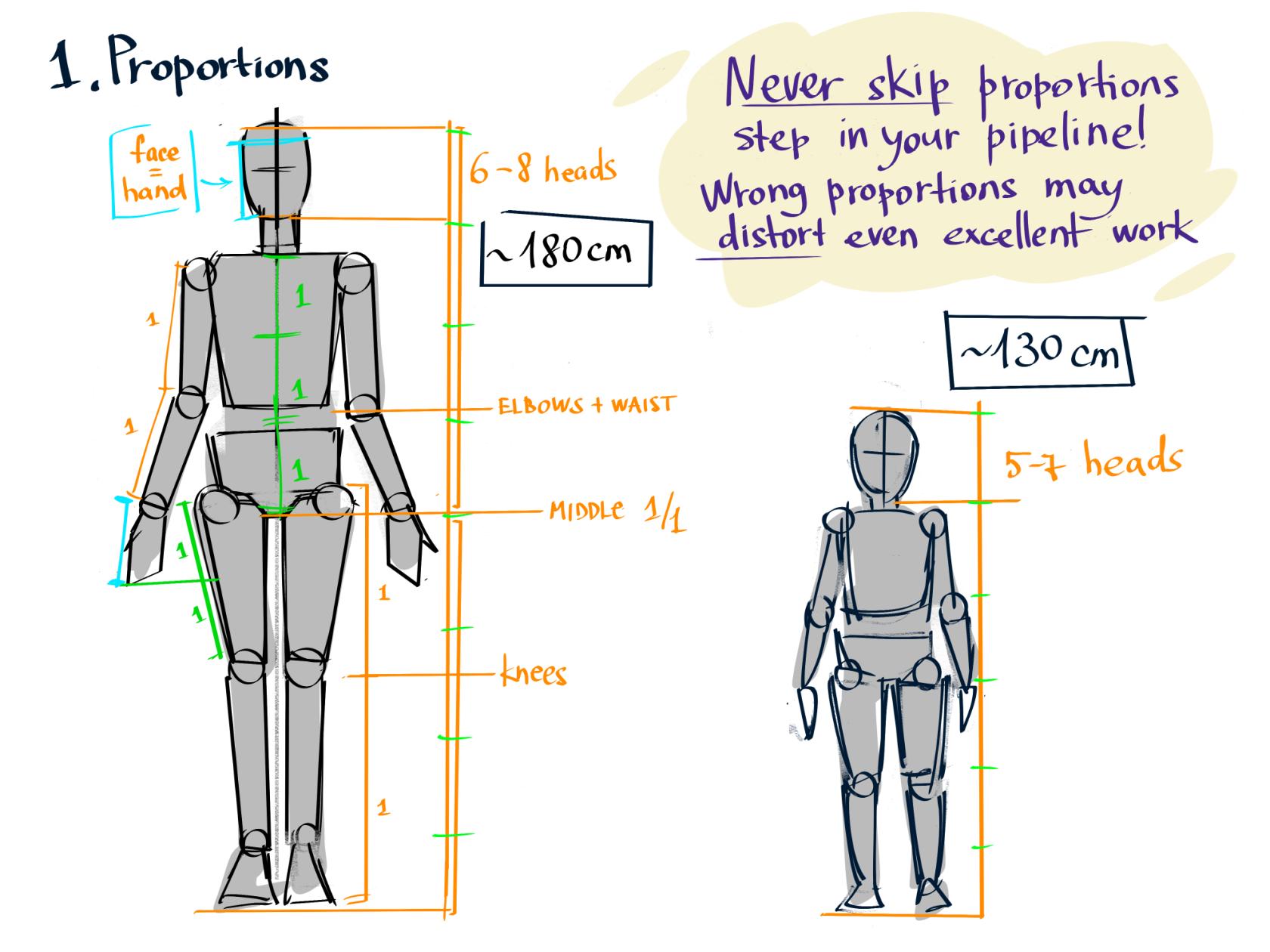
For many centuries, people have used various units of measurement derived from the lengths of different parts of the human body, such as feet, inches, and yards. Artists throughout history have also used similar units of measurement in their drawings!
- First, you should always pay attention to how many heads fit into the height of the person being depicted. Usually, for an average adult, this number is 6-8 heads. If we are drawing a child, the number of heads will be smaller - it all depends on their height. Of course, children's heads are smaller than those of adults, but the difference is not as significant as when comparing, for example, legs, so we are used to children having large heads relative to their bodies, and if the head is small, then we are looking at a tall adult.
- Equally important landmarks are the length of the arms and legs. To find the length of the legs, divide the body in half - this will be the groin point, where the legs begin to grow. And to find the length of the arms, you first need to find the middle of the thigh - that's where the arm will end.
- The elbows are located strictly at waist level, and the knees are the middle of the entire leg.
- The face occupies most of the head and is usually equal to the length of the palm.
In addition to the above, there are many other anchor points that can be used to draw the most realistic proportions of the body and face, but I believe that these points have the greatest impact on the drawing, and the rest can overwhelm beginners and distract them from the main point.
Tweaking proportions
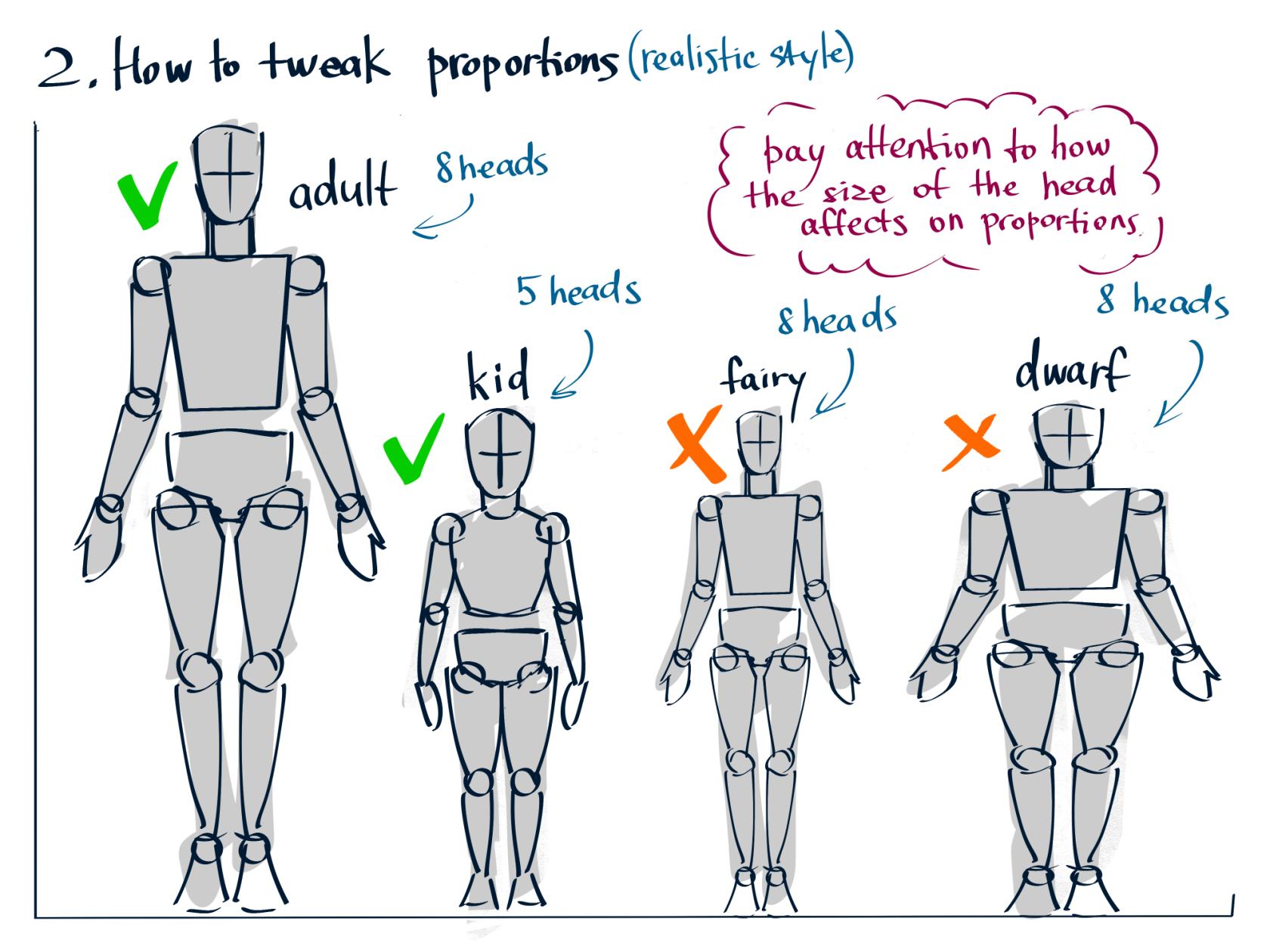
When drawing a realistic character, proportions are especially important, because even a slight distortion can lead to an undesirable result. But when designing unusual characters, such as dwarves, fairies, orcs, etc., these distortions can work in our favor!
Sexual dimorphism
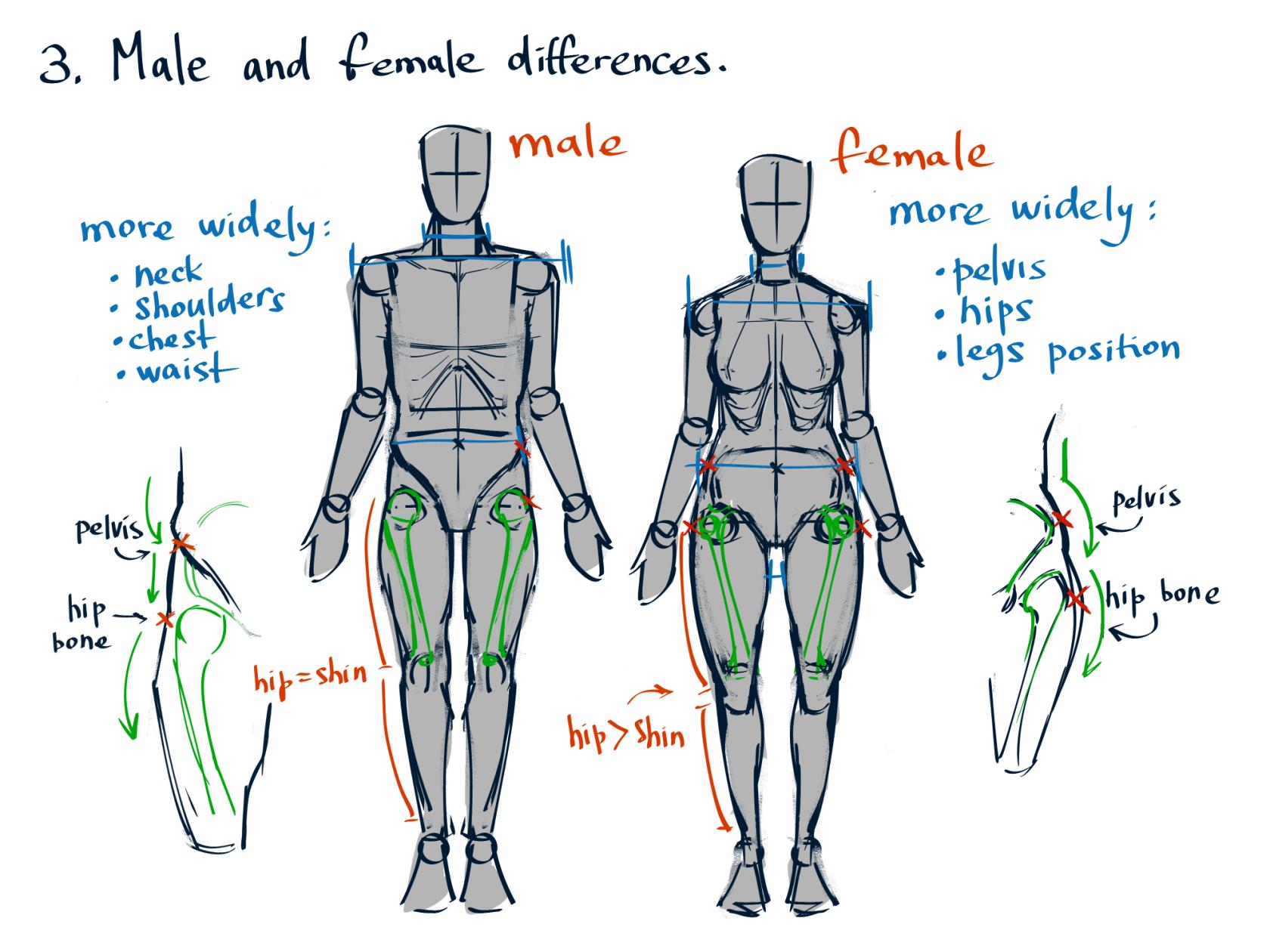
There are also slight differences in proportions between feminine and masculine figures.
The male figure typically has the following characteristics:
- Wider shoulders and chest
- A straighter silhouette
- Naturally more developed muscle mass
- When viewed in profile, the pelvis is positioned straight
The female figure typically has the following characteristics:
- A more curvaceous silhouette
- The pelvis dominates the shoulder girdle in terms of mass
- Due to the wider pelvis, the legs are slightly wider apart
- The legs are often longer in relation to the body than in the male figure
- The thigh may be longer than the lower leg
- Viewed in profile: the pelvis is tilted
Afterword
In conclusion, I would like to remind you that proportions are the foundation; without them, the entire figure will fall apart. Even if you know how to draw each muscle well, these “beads” will scatter if they are not strung on a “thread,” which we use to check ourselves for the accuracy of the figure's proportions.
Also, remember that the proportions discussed in this summary are a kind of generally accepted standard, and if the task requires you to go beyond the standard to achieve your goals, feel free to do so!
Reference Pictures (for study only)
From Reference.Picture; Grafit Studio
There of course isn't ONE average human body with the perfect proportions, but I still believe some reference is better than none :)
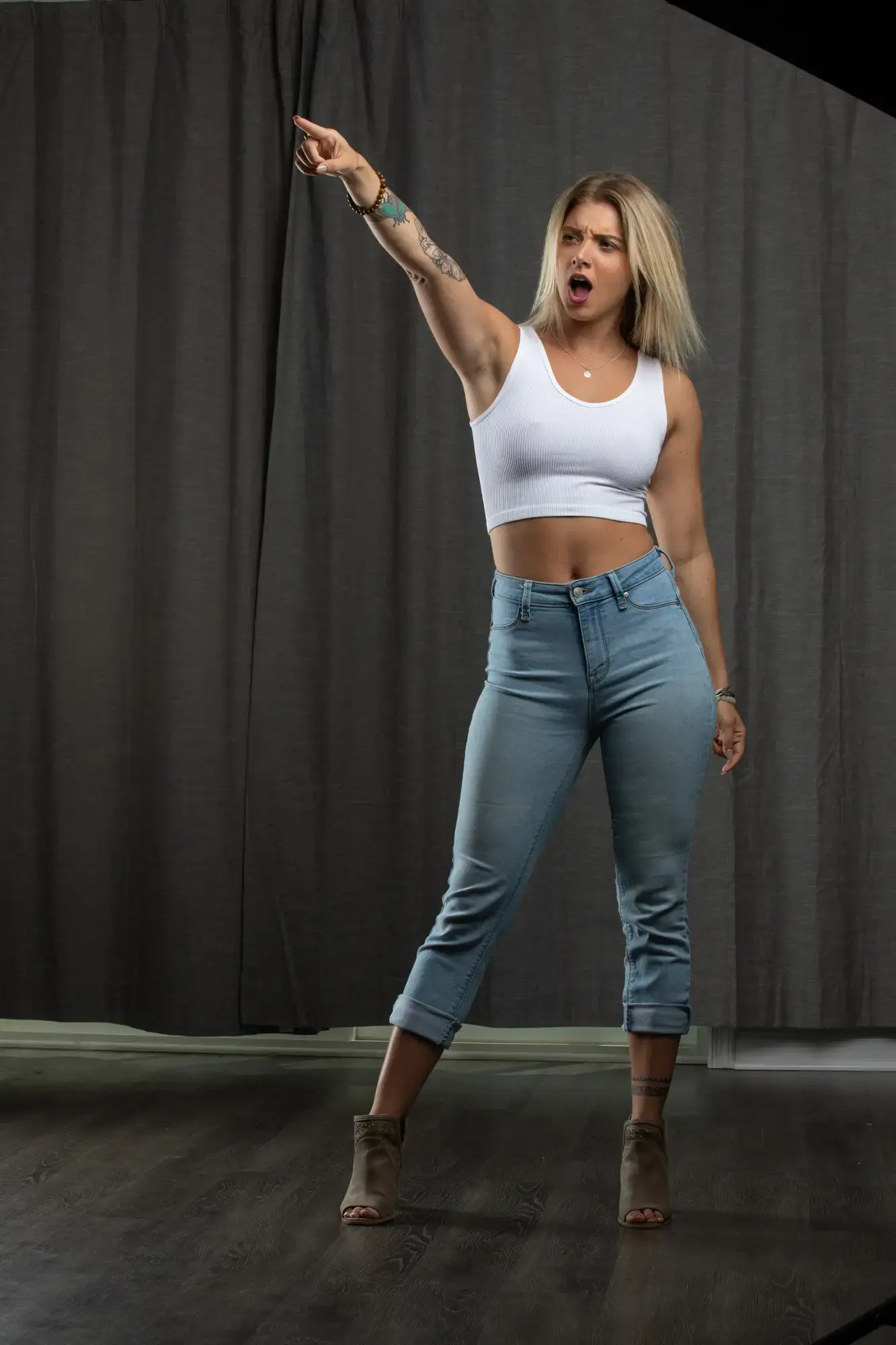
credit to: Reference.Pictures
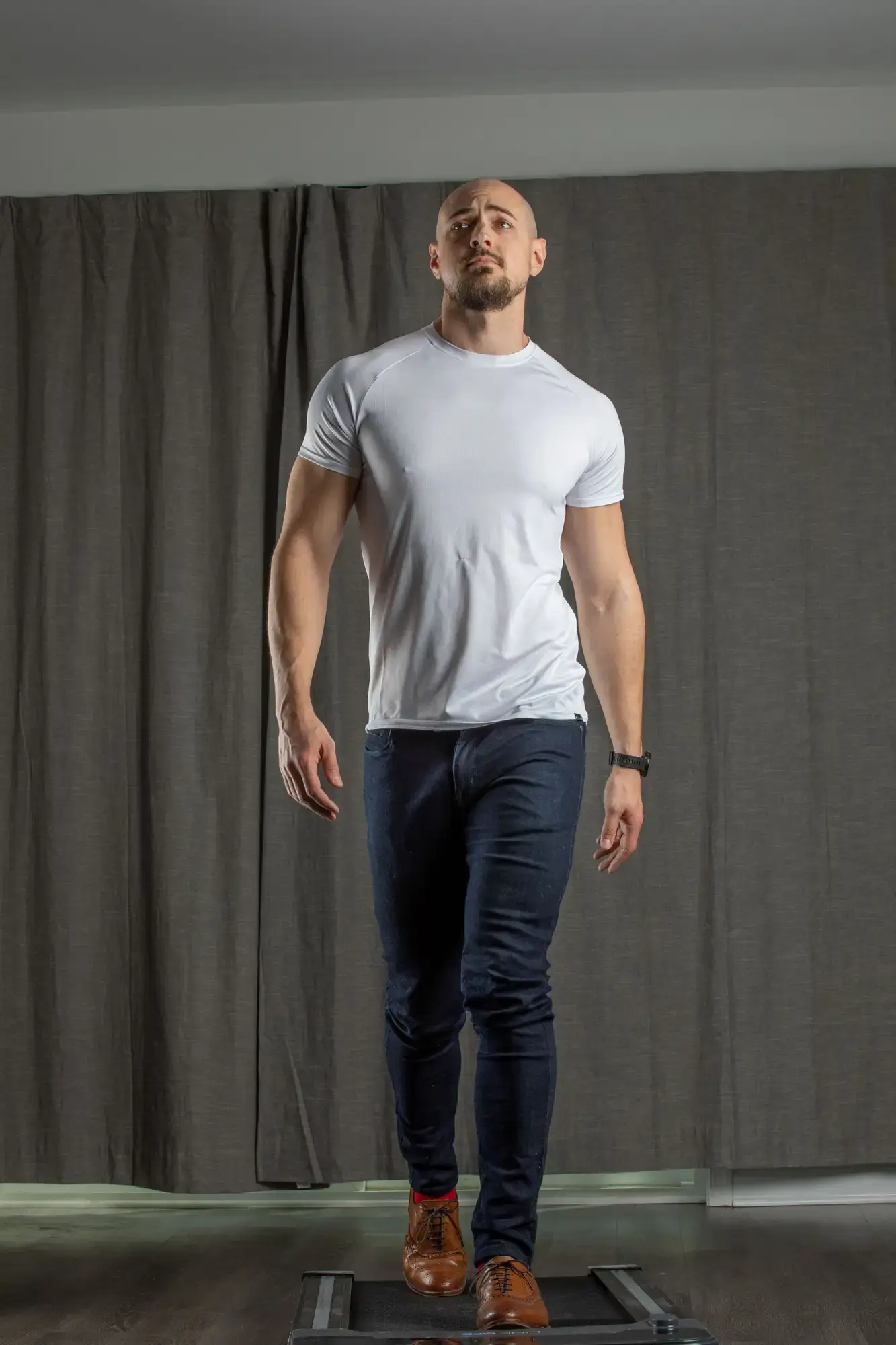
credit to: Reference.Pictures
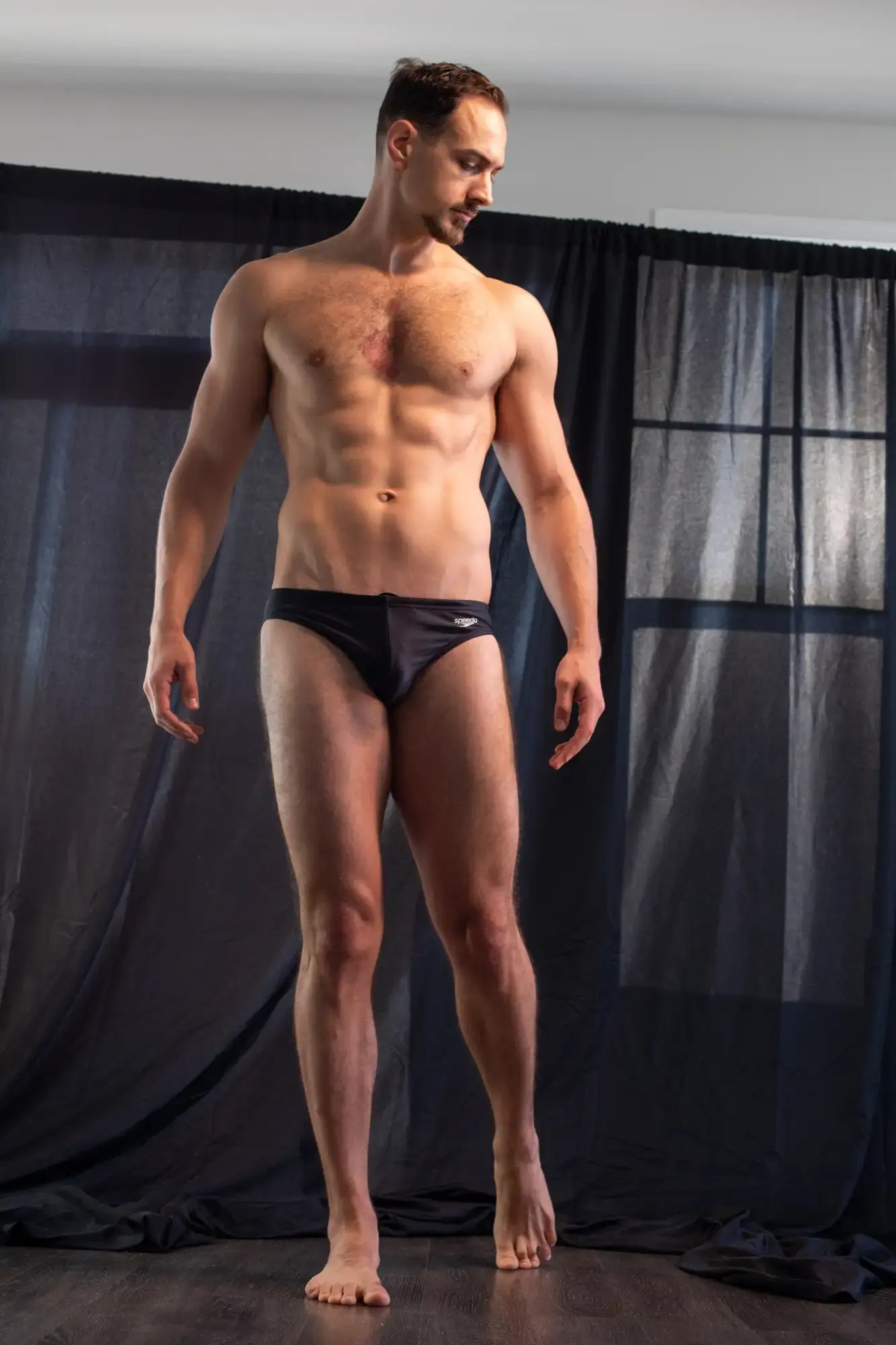
credit to: Reference.Pictures
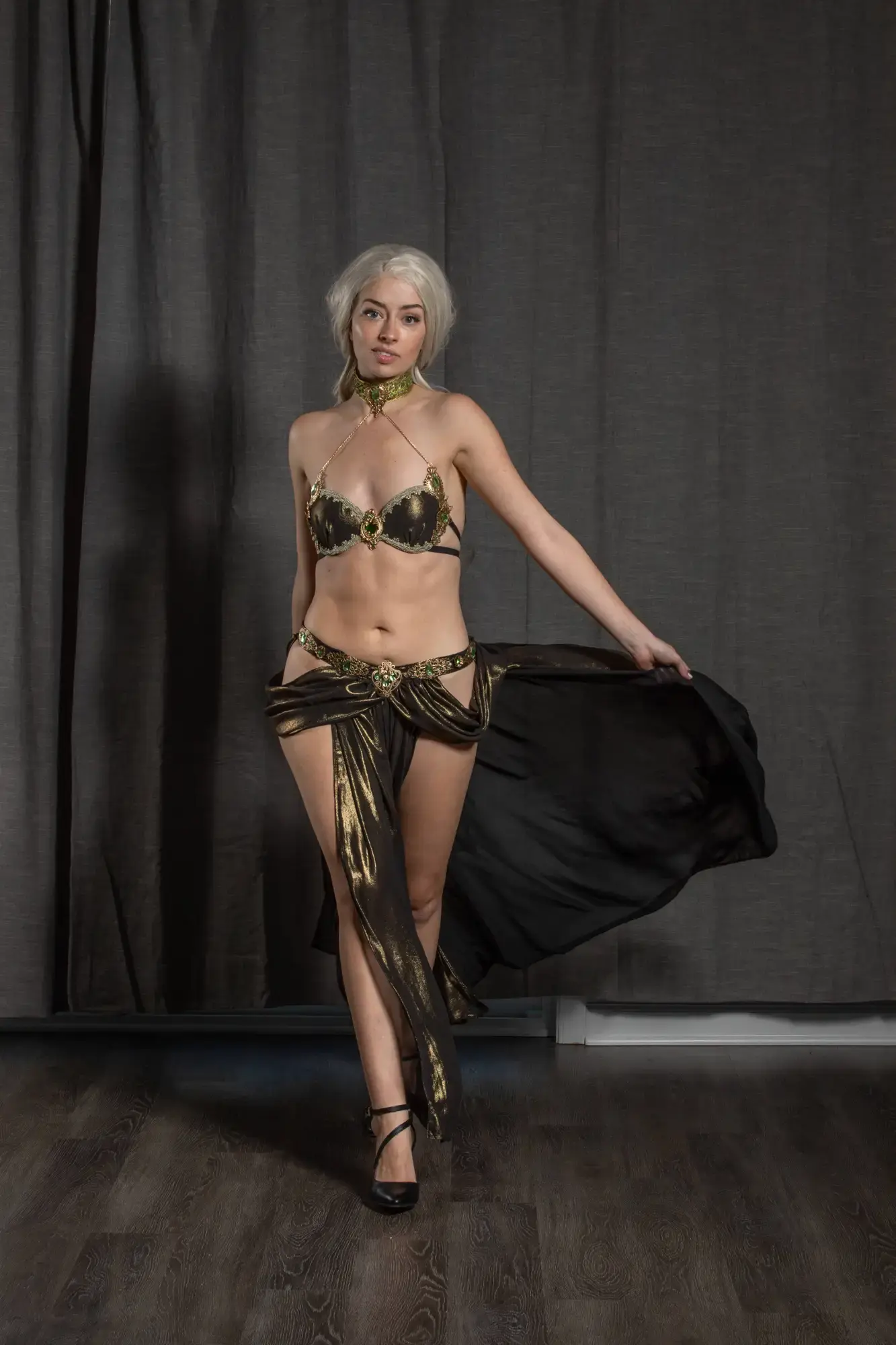
credit to: Reference.Pictures
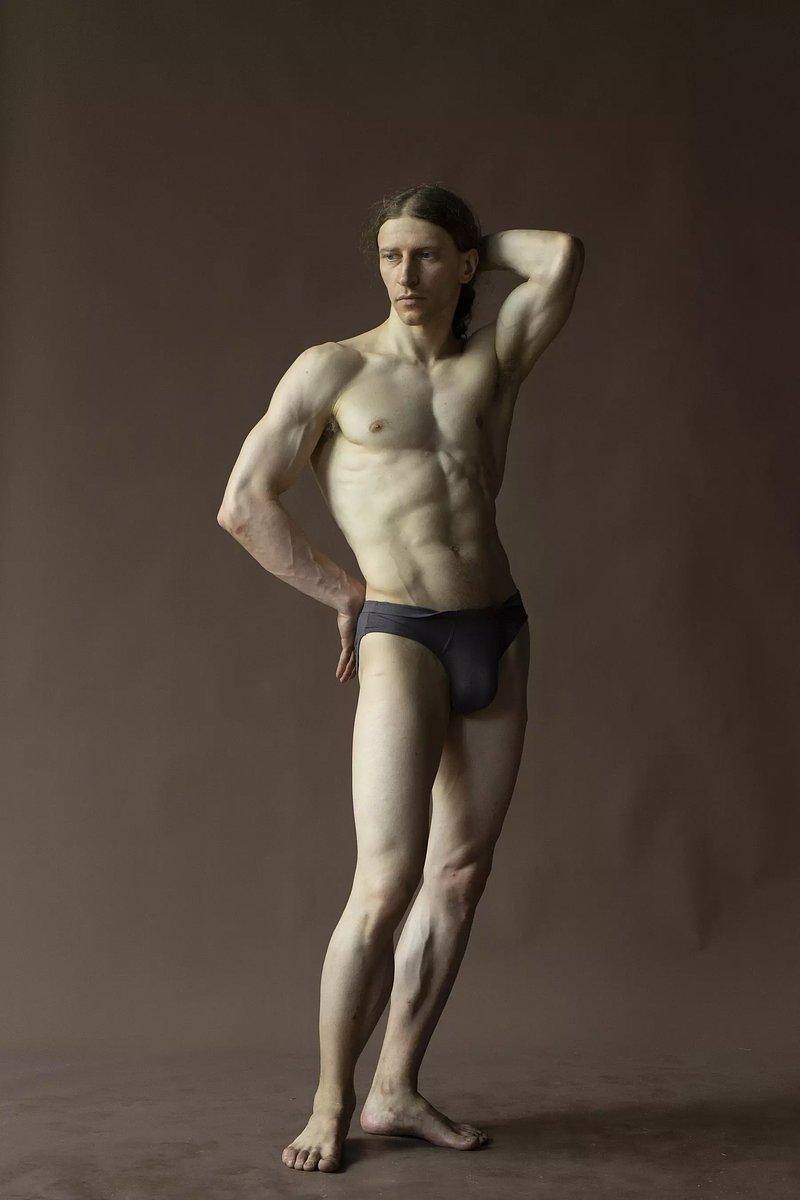
credit to: Grafit Studio
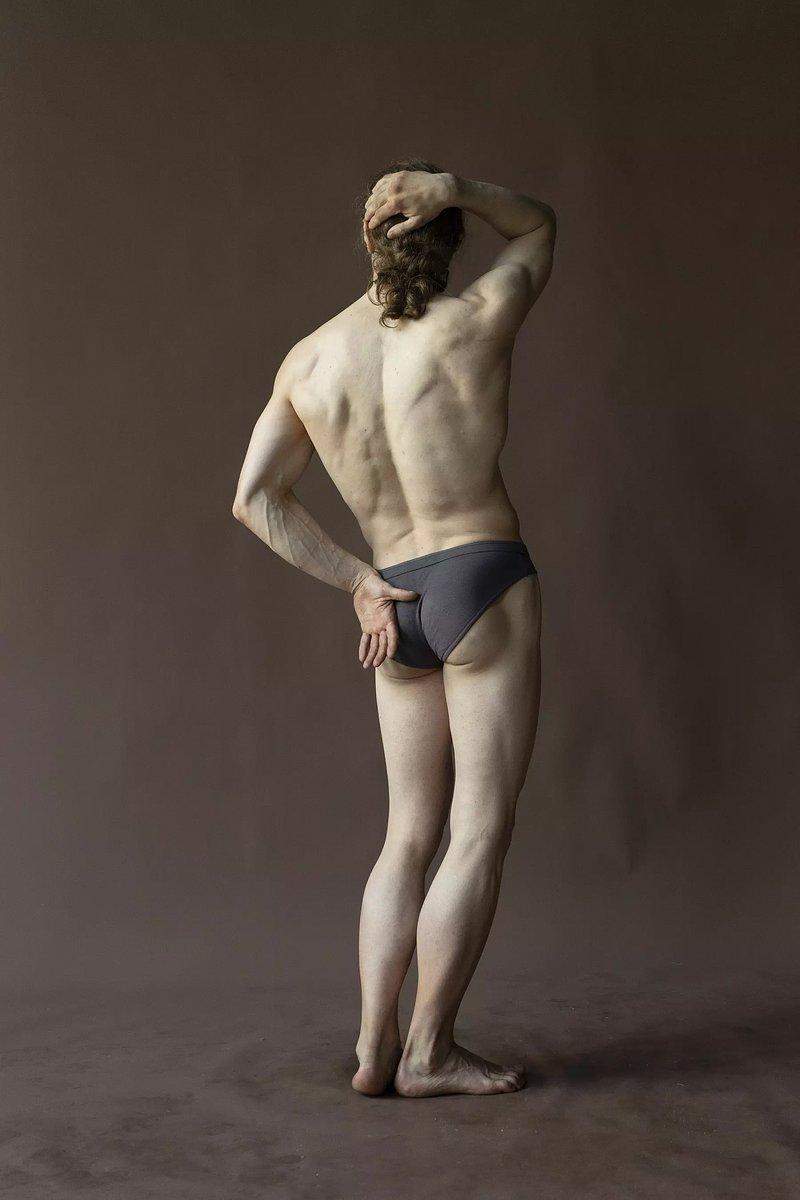
credit to: Grafit Studio
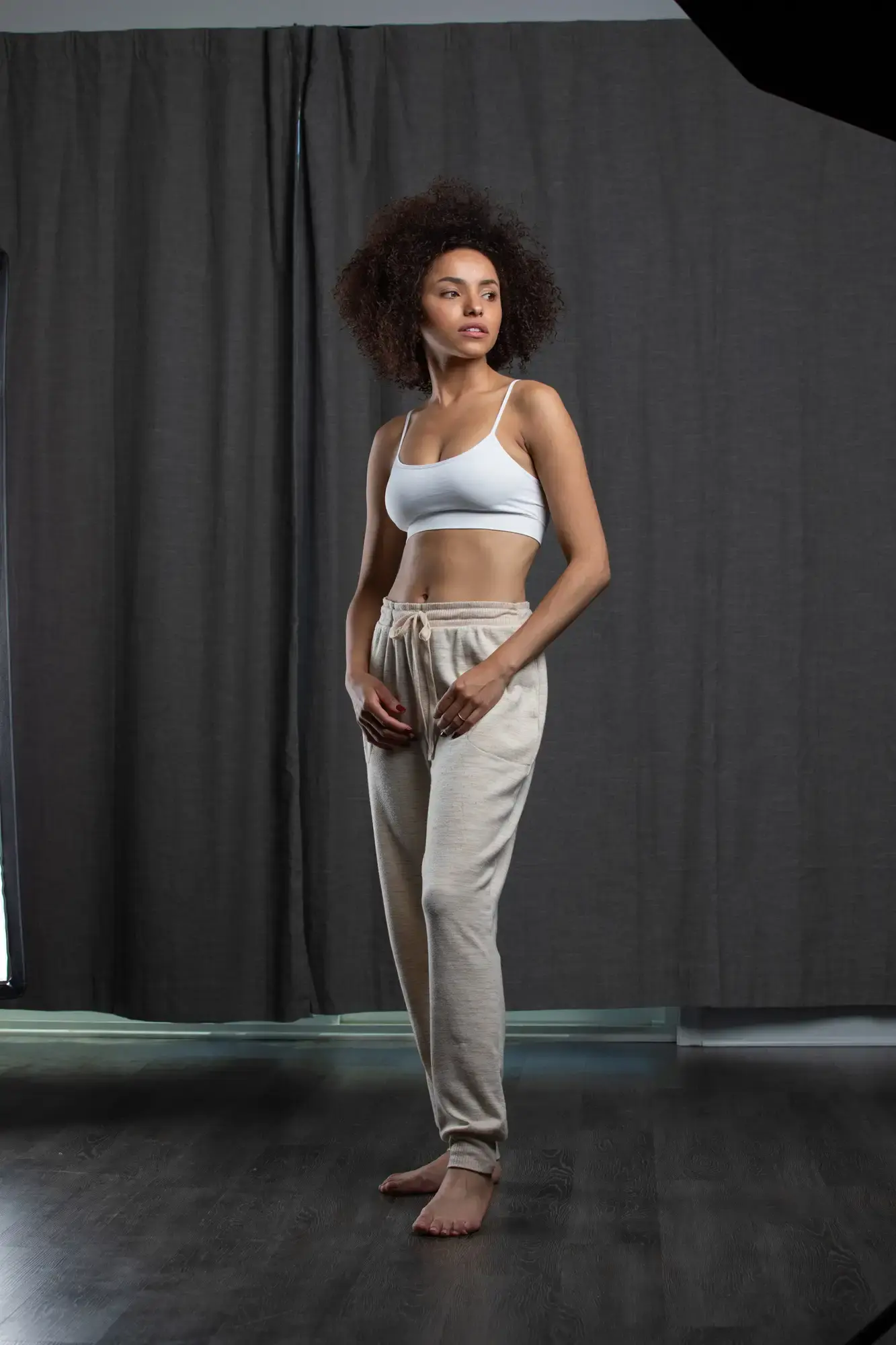
credit to: Reference.Pictures
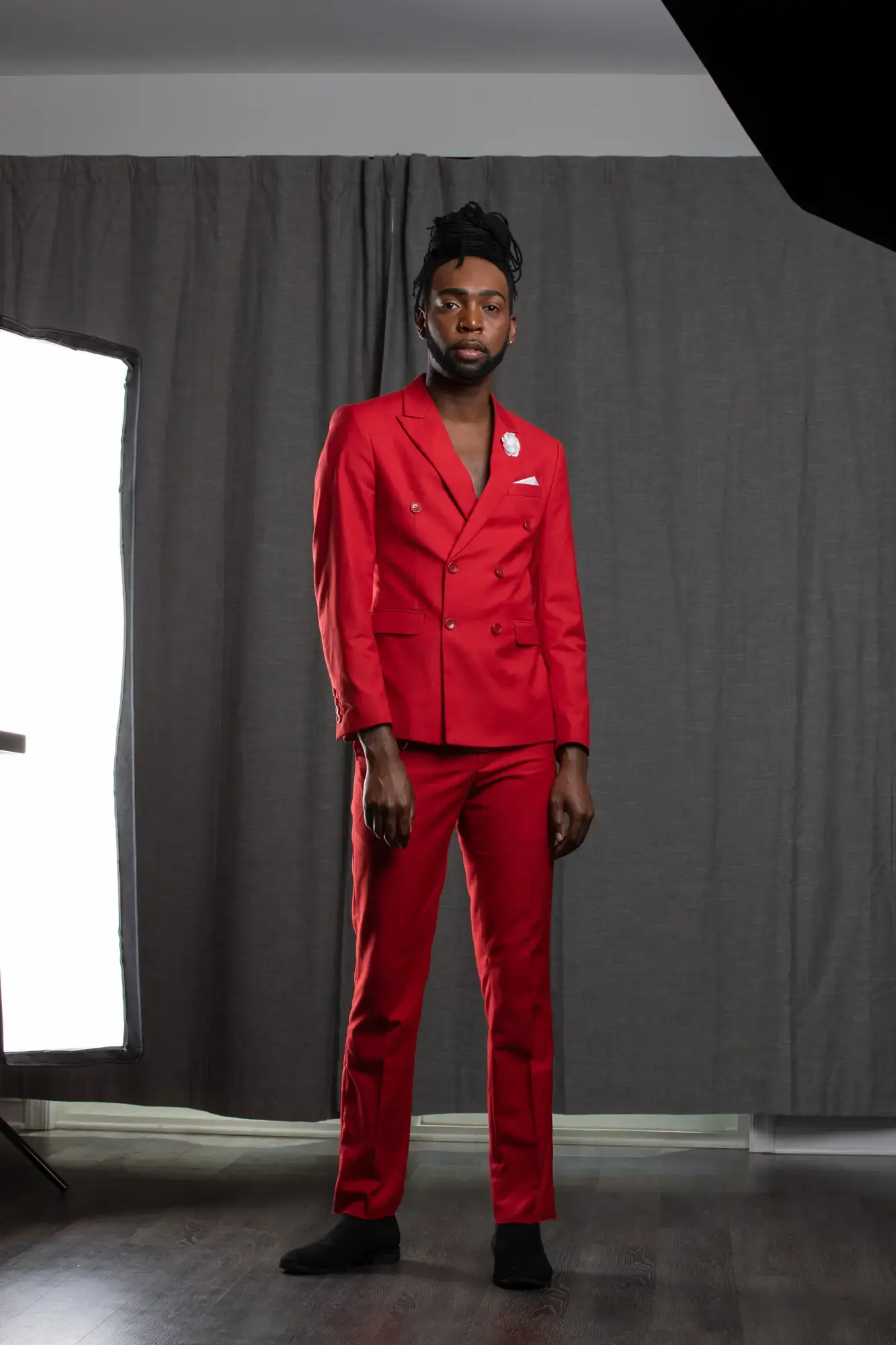
credit to: Reference.Pictures
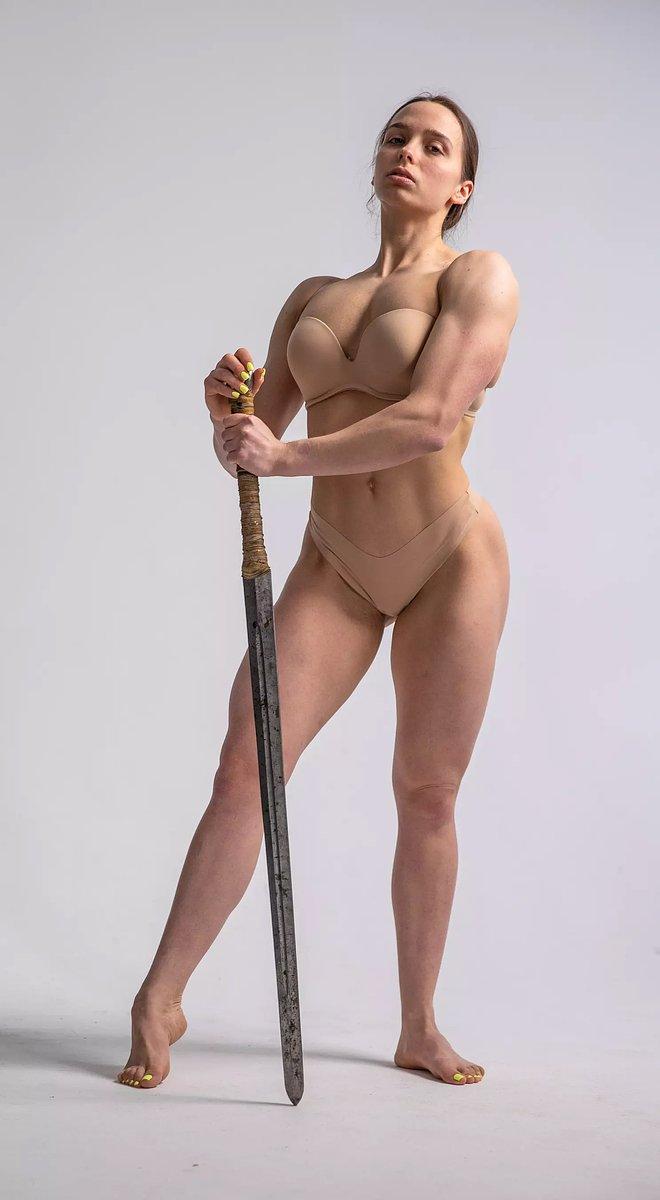
credit to: Grafit Studio
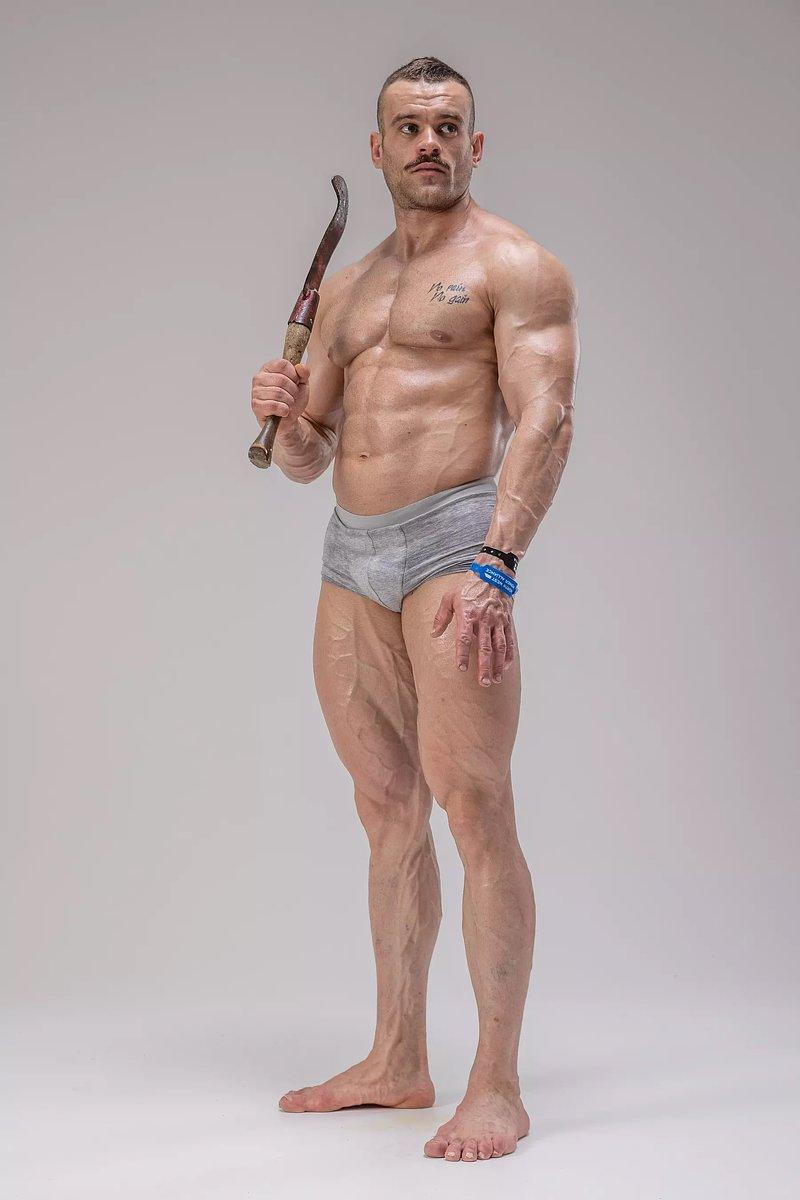
credit to: Grafit Studio
Follow me on X! rina_smo
No comments to display
No comments to display