Female Torso | Ventral (ChartaFL)
The torso is the “core” or the “trunk” of the human body and also the body's axial region. Comprised of three section (the chest/thorax, the abdomen & the pelvis), the torso is where the limbs are connected to, and where important organs of the body (aside from the brain) are housed. The skeletal structure (the ribcage, collarbone, spine, shoulder blade, and pelvis), fat distribution, and muscular structure in a person’s torso is what makes up their torso’s shape as a whole. The illustration of the female's torso anatomy can be seen in Figure 1.
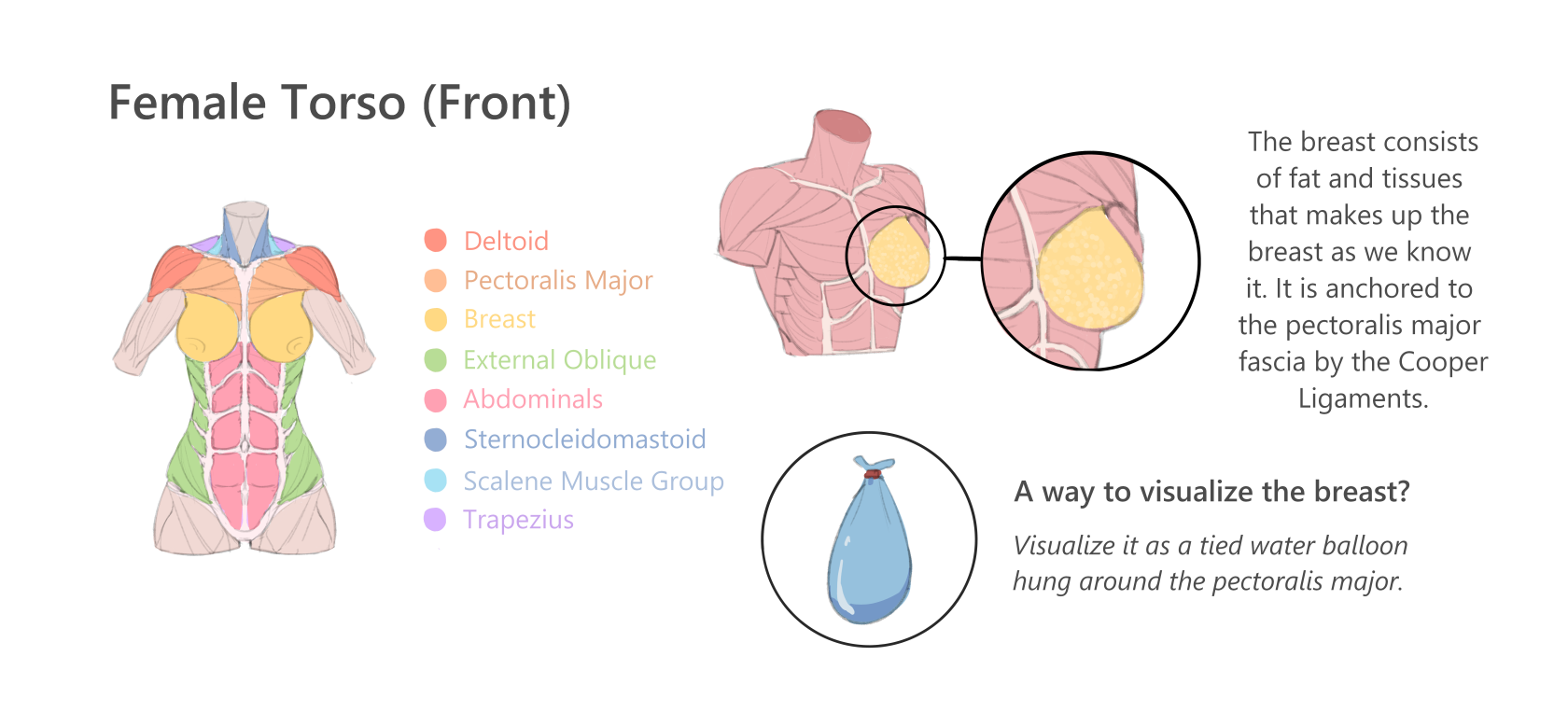
Figure 1. Anatomy of Female Torso (Ventral)
There are several differences that the female anatomy has to that of the male’s anatomy. For the differences in their torso, these points are to be remembered:
- Different Muscle Distribution: The muscle definition in woman are often less pronounced, much smoother, and much rounded than males. The waist and the pelvic area in particular have these features pronounced clearly.
- Difference in Fat Percentage: The fat percentage in a female body is higher than that of a male who has more muscle tissue mass. This particular characteristic is most pronounced around the hips, the buttocks, and the breast.
- Different Bone Density: The bone density of a female is lower, thinner, and smaller compared to that of a male.
- Ribcage-Pelvis Ratio: A female has a much narrower ribcage and a wider, tilted pelvis, compared to that of the male’s wider ribcage and narrower, taller pelvis. Do note however that there are varieties of this ratio, contributing to what’s known as a “body shape”.
- Less Pronounced Adam’s Apple
- The Breast Difference
The characteristics and differences as pointed above is what makes up the female’s torso.
About The Breast
One thing to keep in mind about the breast: the breast is not a muscle. It’s a part of the body that is comprised mostly of fat and a few tissues that anchored itself to the fascia of the pectoralis major (see Figure 1). We can try drawing the breast by simplifying it as a water balloon tied/hung around the pectoralis major. While a water balloon does not perfectly represent the breast in its entirety, it is able to closely mimic the breast’s volume, weight, and physics (e.g. the sagginess of the breast and how gravity and force drags the breast’s weight). Artists can use this simplification to capture the organic and natural feeling of the breast in their drawing.
How to Draw the Female Torso
With the explanations out of the way, let’s try to draw the front view of the female torso while applying the “water balloon” trick:

Figure 2. Steps on How to Draw the Female Torso
Step 1: Draw four spaced horizontal line and one vertical line crossing all four lines down in the middle. These lines are used as guidance for drawing the torso. I recommend starting with the 1st horizontal line and then the vertical line, before adding the rest. The lines serves as landmark in which the collarbone (1st line), the ribcage (1st and 2nd line) and the pelvis (3rd and 4th line) will be aligned to. These lines can be used to help us establish the torso's proportion, and to separate the torso into four sections (shoulder/neck, ribcage/chest, abdomen, and pelvis section).
When drawing the torso in different poses and angles, you can try tilting and rotating these three lines to draw the twist and bends of the torso. Additionally, the vertical line can be treated like a "Action Line" to guide you with the torso's bent or twisted form.
Step 2: Draw a simplified shape of the ribcage and pelvis. Make sure that body is centered to the middle of vertical line.
You can consider the shape of an egg as a guideline when the drawing the ribcage, with a small portion of the top cut horizontally as a hole for the neck, and the bottom portion cut in a similar fashion. The pelvis can be simplified into either an inverted bucket, block of triangle, or a block of polygon, tilted to the front by a small degree.
Step 3: Add the collarbone and a simplified shape of the shoulder joint (a circle). This collarbone will serve a landmark from where the chest and the neck will be drawn from.
Step 4: Draw the neck as a tilted cylinder, then connect the trapezius and the rest of the neck muscles to it.
Step 5: Draw a simplified pectoralis major and deltoid before drawing the breast.
Step 6: Draw the breast in a balloon shape. You can draw a circle first to help with the breast placement before drawing the drooped balloon shape tied close around the middle of the collarbone.
Step 7: Draw the external obliques. Connect it from the ribcage to the pelvis in an hourglass shape.
Since there is more than one shape to the female body, the shape and width of the external obliques may be different for one body and another. The hourglass shape is not absolute.
Step 8: Following the vertical line as a guideline, draw the abdomen and the navel.
The abs on the female’s torso is barely visible for the most part, except when they have a toned or muscular stature, or when there is an accumulation of fat around the lower side of the abdomen.
Step 9: Finishing Touches. You can fill the detail in, adding a small portion of the limbs to make the torso look coherent, coloring it, shading it, etc.
Advanced
How Body Shapes Influence the Torso
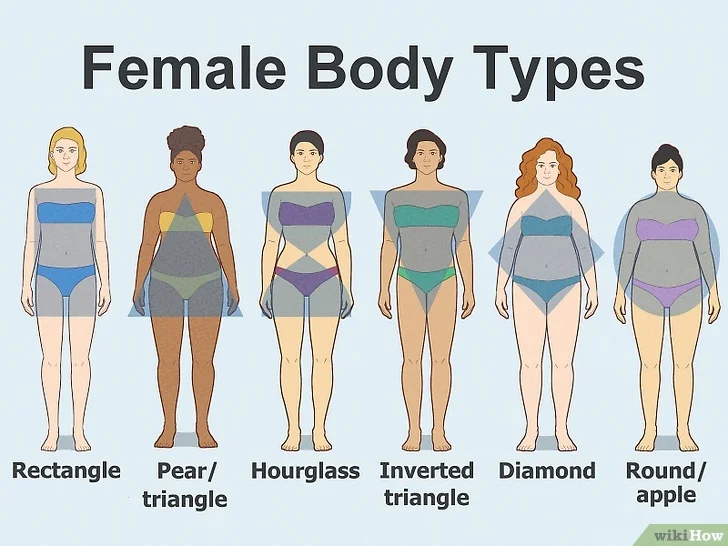
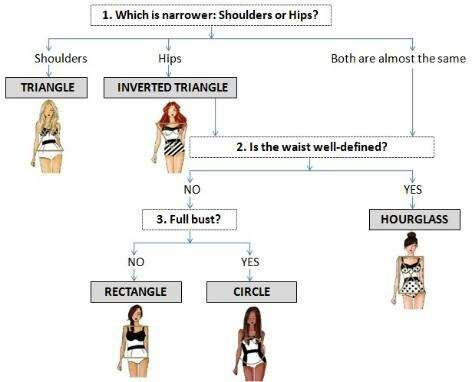
The form of a person’s torso is greatly influenced by their body’s “composition” and “shape". Body shapes are the cumulative product of the body’s bone structure and they body'sthe distribution of body's muscle and fat. These shapes are categorized into these general shapes: hourglass, pear (triangle), apple (round), inverted triangle, diamond, and rectangular. You may refer to the image below as an illustration for how the body shape looks:
Source: WikiHow
Source: ResearchGate